
Manage OS and patching lifecycles with a repeatable process.
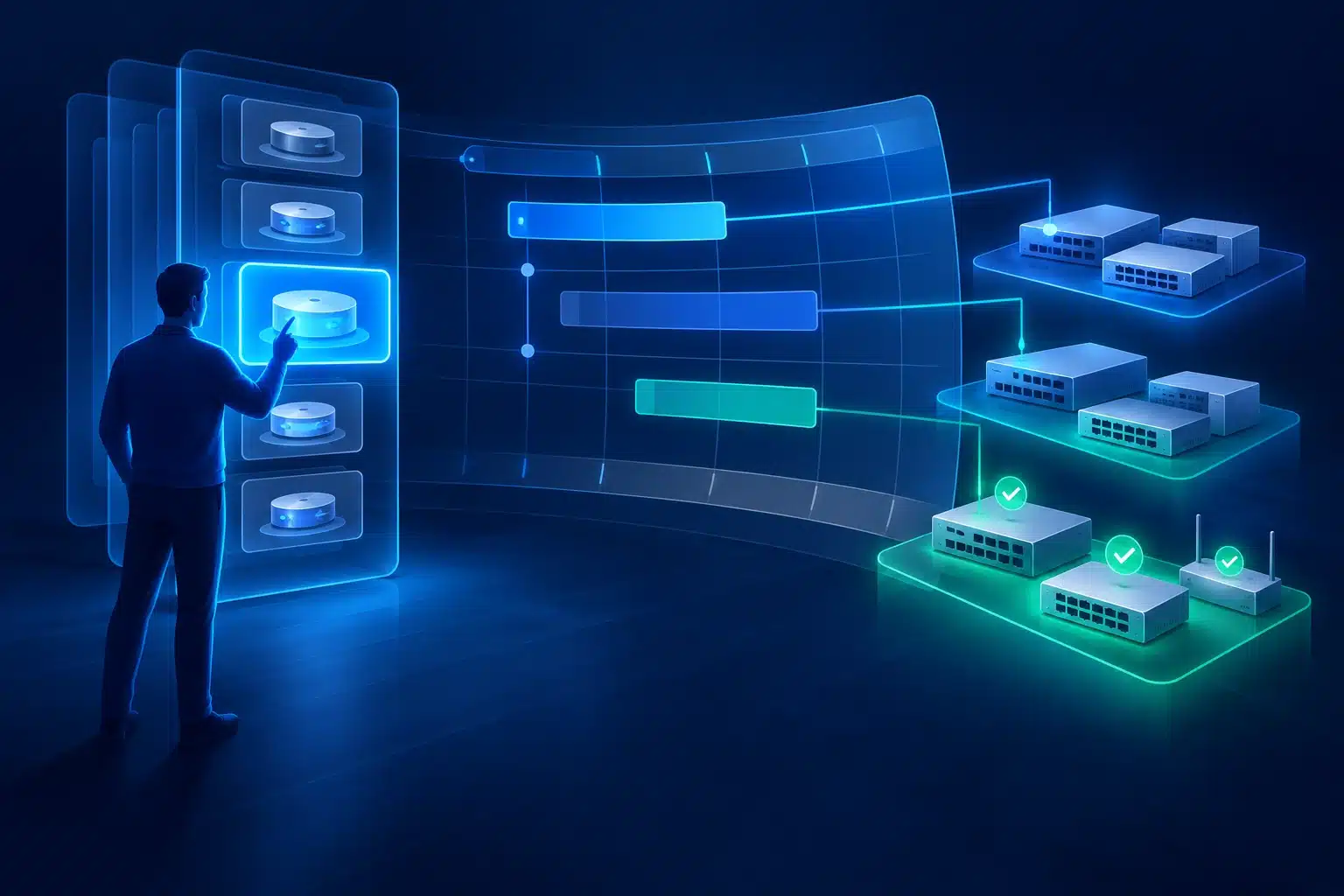
Use OS catalogs and deployment plans to select approved images, validate readiness, schedule upgrades or downgrades, and review execution results on supported devices.
WHY IT MATTERS
The upgrade process needs to be ready before the next urgent patch.
Delaying a software update can leave the enterprise exposed. Rushing one without a repeatable process can interrupt services. OS Manager gives teams built-in lifecycle constructs for firmware and operating-system management, so every patching priority does not become a new scripting project.

feature / capabilities
What OS Manager provides
THE BUSINESS CONTRIBUTION
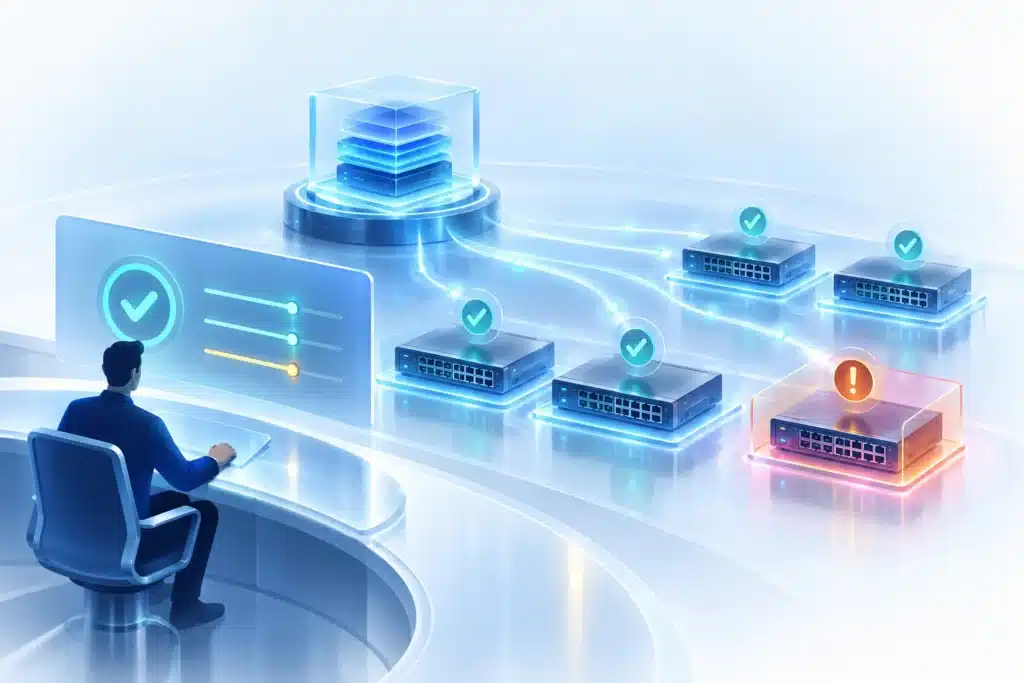
Accelerate response with continuity and security
Repeatable software management supports faster operational and security response while protecting continuity. Teams can measure progress through policy coverage, completed upgrades, and time to verified remediation instead of counting scripts written.
PART OF THE FULL STACK
How OS Manager integrates in the platform
OS Manager owns software image selection and deployment plans; distributed File Server instances provide image delivery. Device Manager supplies inventory and management state. CME (Config Model Editor) owns separate CLI/API state assessments. Network RPA can invoke assessment tasks around OS operations and coordinate approvals, records, and operation-specific recovery paths.
Functional lifecycle components
Device Manager
Discover and inventory devices, inspect configuration and software state, and maintain the fleet information that network automation depends on.
Orchestration & integrations
Network RPA
Build and run visual processes that connect Gluware applications, external systems, operational logic, scheduling, and traceable tasks.
Business outcome solutions
Titan Exposure Remediation
The remediation component of Titan Exposure Management can orchestrate supported patches or compensating controls with approvals, validation, and outcome verification.
Put OS Manager to work.
See how this capability can support your next network automation outcome.
PLATFORM CAPABILITIES
CAPABILITIES THIS COMPONENT SUPPORTS
See the functional value.
Device & OS lifecycle management
Connect discovered inventory, device advisories, image selection, deployment plans, and operational checks.
Network exposure management
Bring device advisories, contextual CVE assessment, and supported remediation into a governed network process.
NIST & Cisco CVE/PSIRT integrations
Associate Cisco PSIRT advisories and NIST/NVD CVE information with discovered devices and software.
OS management & patching
Plan, validate, schedule, and review supported network software upgrades, downgrades, and patching operations.